An Ash Monitor and Laptop Riser With a Keyboard Cubby
- Hands on
- 200 min
- Start to finish
- 5.3 hours
- Level
- moderate
- Makes
- one 850mm monitor and laptop riser
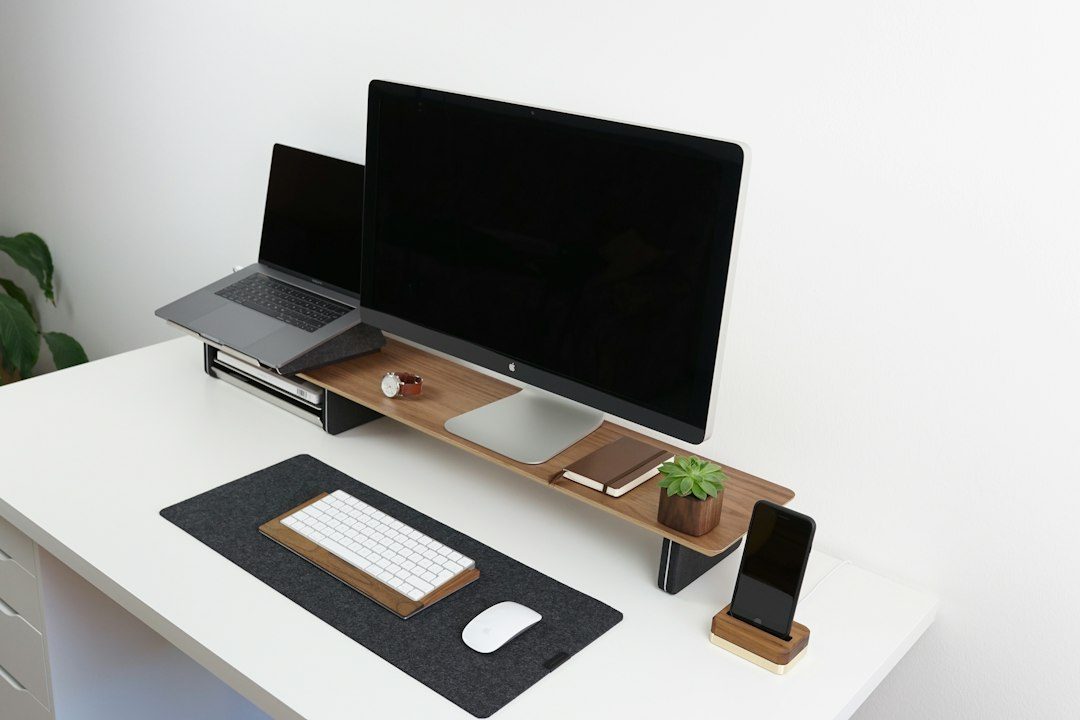
A monitor sitting flat on the desk usually sits too low, and propping it on books works until the books slide. This riser is a simple two-leg trestle in solid hardwood: a shelf wide enough for a monitor and a laptop side by side, carried on two legs tall enough to clear a keyboard, with a stretcher between them for rigidity and a small dock at one end to keep a phone upright. The whole thing comes from one project panel and a short offcut.
What you need
Step by step
-
Cut the shelf top (850 x 250mm), both legs (250 x 100mm) and the stretcher (814 x 70mm) from the ash panel, orienting the legs so the grain runs from top to bottom.
25 min -
True any ragged saw edges with a block plane or a few passes of the sander before marking anything out.
15 min -
Mark a housing 70mm long and 9mm deep for the stretcher on the inside face of each leg, starting 20mm up from the foot.
10 min -
Clamp a straightedge across each leg to guide the router, and cut the housing in two shallow passes rather than one. Keep both hands on the router and feed it left to right, against the direction the bit spins.
30 min -
Cut the phone slot in the small offcut block with two backsaw cuts 6mm apart, then clear the waste between them with a chisel.
15 min -
Dry-fit the stretcher into both housings and check the frame stands square before any glue goes on.
10 min -
Glue the housings, seat the stretcher, and clamp the frame until the glue has gone off.
10 min -
Drill and countersink two pilot holes down through the shelf top at each end, directly over where the leg thickness will sit.
15 min -
Glue the top edge of each leg, position the shelf on top, and drive the screws home; plug or fill the counterbores.
20 min -
Glue the phone-dock block to the right-hand end of the shelf top, slot facing up.
10 min -
Sand the whole riser through progressively finer grits, easing every edge a hand will rest on.
20 min -
Apply the finish in thin coats, cutting back lightly with fine abrasive between the first two.
15 min
Afterwards
Vacuum the sanding dust rather than brushing it into the air, and wear a dust mask while sanding — hardwood dust is a known carcinogen with repeated exposure. Let an oil finish cure for the time stated on the tin, usually 24 hours, before loading the shelf, and a few days more before wiping it down with anything damp. Check the screws under the shelf haven't worked loose after the first week of use, and re-oil the top once or twice a year.
Questions
Will this take the weight of a heavy monitor?
Into 18mm ash with glued housings, yes, for any single monitor up to about 10kg. For two displays side by side, add a third leg under the middle of the shelf.
Can I build this from plywood instead of solid ash?
18mm birch plywood works the same way structurally. Edge-band the shelf front and the leg edges, since a routed housing will otherwise show the plies.
How do I stop the laptop sliding or scratching the top?
Glue a strip of thin cork or felt where the laptop sits. It grips the base and protects the finish underneath it.
My keyboard is taller than 100mm with its feet down — what then?
Measure the keyboard's thickest point, feet included, before cutting the legs, and add 10–15mm of clearance on top of that measurement.